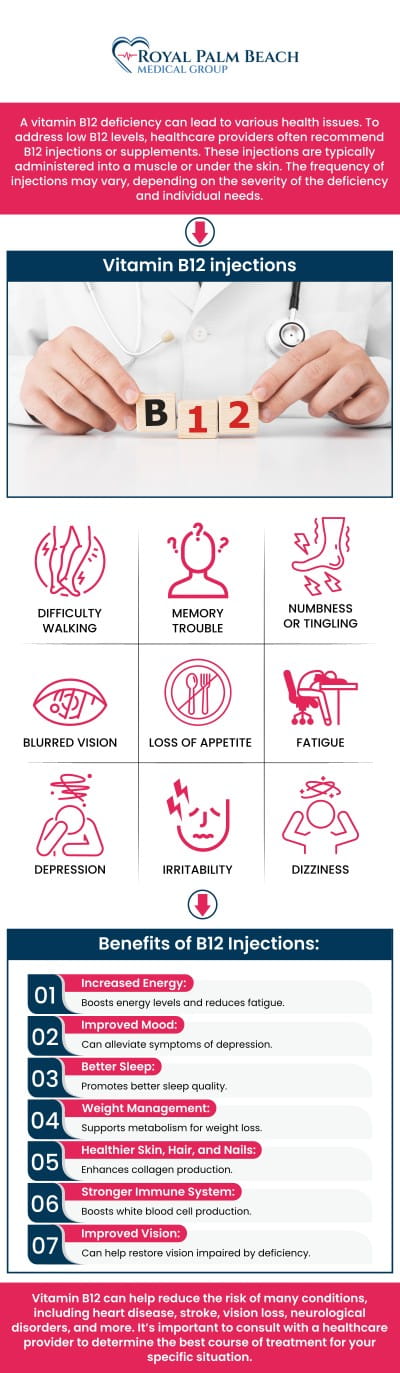
Quick refresher: what B12 actually does Vitamin B12 (cobalamin) is a water-soluble vitamin involved in red blood cell formation, nervous system maintenance, and the methylation reactions that support energy metabolism
Sardar MB, Nadeem ZA, Babar M
Before starting vitamin B12 injections, tell your healthcare provider if you are pregnant or lactating
Retatrutide's Phase 2 trial data (Jastreboff et al., NEJM 2023) identified a side-effect profile broadly consistent with other incretin-based therapies: Gastrointestinal : Nausea, vomiting, diarrhoea, and constipation were the most commonly reported adverse effects, particularly during dose escalation
It helps regenerate damaged nerves, improves nerve signal transmission, and promotes the production of healthy red blood cells

Suitable for all levels - no prior injecting experience required Theory Covers What Vitamin B12 is and how it functions in the body Signs and symptoms of B12 deficiency Benefits of intramuscular injection vs oral supplementation Types of B12: Methylcobalamin vs Hydroxocobalamin Injection sites: deltoid, gluteal and subcutaneous options Needle selection, syringe handling and sharps safety Client consultation and medical history screening Contraindications and when not to treat Dosage guidelines and treatment frequency Anaphylaxis awareness and emergency procedures Health, safety and infection control Legal and professional scope of practice Consent, documentation and insurance Practical Session Covers Full client consultation in a clinical setting Preparing the injection site and maintaining a sterile field Correct intramuscular injection technique Supervised administration on a model Post-treatment observation and aftercare Sharps disposal and clinic hygiene protocols One-to-one guidance throughout What's Included All products, needles and equipment on the day Anaphylaxis guidance and emergency protocol reference material CPD-accredited certificate on completion Post-course support Accreditation Outcome Accredited CPD certificate of completion